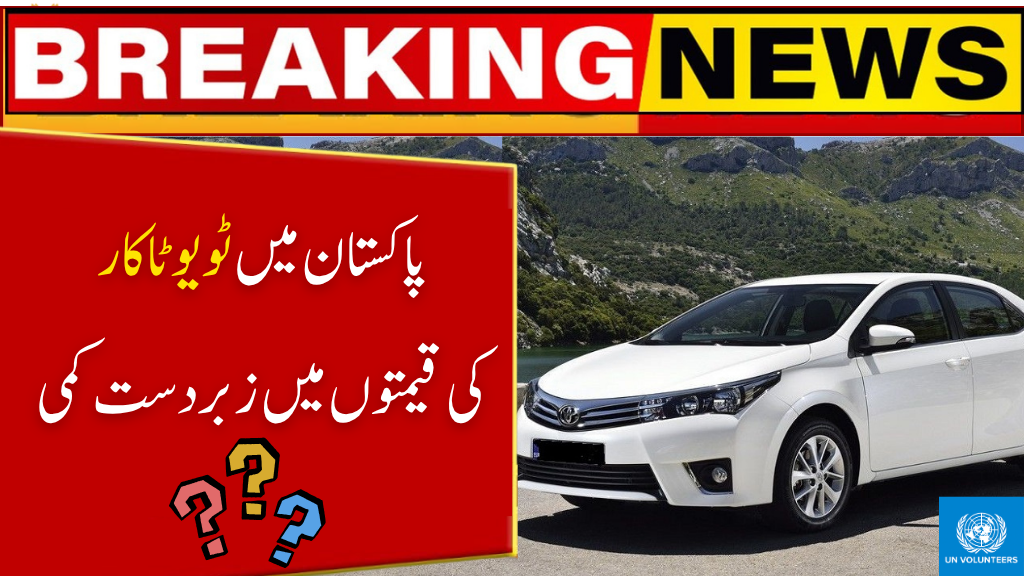
Toyota Car Prices May Drop in Pakistan as IMC Plans to Import Used Vehicles Under New Policy (October 2025)
The automobile industry in Pakistan could be on the verge of a major shake-up. The Indus Motor Company (IMC) — the assembler and distributor of Toyota vehicles in Pakistan — is reportedly exploring the commercial import of used cars following the government’s new import policy.
This development may pave the way for lower Toyota car prices in Pakistan, greater competition in the auto market, and potentially more choices for consumers.
Background – The Shift in Toyota Pakistan’s Strategy
For decades, Toyota Pakistan (IMC) has been one of the most trusted auto brands in the country, known for its durable vehicles, strong resale value, and nationwide dealership network.
Traditionally, IMC focused entirely on local vehicle assembly, generating employment opportunities and contributing significantly to Pakistan’s manufacturing sector. However, the company now finds itself adapting to changing market conditions and government reforms in the automobile industry.
With the new commercial import policy introduced by the Ministry of Commerce, IMC is re-evaluating its long-standing strategy — exploring options to import used Toyota vehicles to meet rising consumer demand and remain competitive in an evolving market.
What Is the New Import Policy About?
The Ministry of Commerce recently announced a policy amendment that allows commercial imports of used cars, vans, trucks, and motorcycles under specific HS Codes.
Previously, imports of used vehicles were limited to individuals under gift or personal baggage schemes. Now, authorized commercial entities — including automakers like Toyota — can import used vehicles for resale, provided they comply with new documentation and regulatory standards.
IMC has reportedly approached the Engineering Development Board (EDB) for official guidance on the process, documentation, and compliance required to begin this venture.
What This Could Mean for Pakistani Car Buyers
If IMC proceeds with importing used Toyota vehicles, the move could have far-reaching implications for consumers and the auto industry alike.
Potential Benefits for Consumers:
-
Lower Vehicle Prices: Increased availability of used Toyota cars may drive down prices across various segments.
-
Greater Variety: Consumers could access newer international Toyota models not currently assembled in Pakistan.
-
Better Technology: Imported vehicles often include advanced safety, fuel efficiency, and infotainment features.
-
Shorter Delivery Times: Reduced dependence on local production could minimize waiting periods for popular models.
Industry analysts suggest this policy could create a more balanced automotive market, where both local and imported vehicles coexist — offering consumers a broader range of choices.
Possible Impact on Local Manufacturing
While consumers may welcome lower prices, the new import framework has sparked discussions within the auto sector about its impact on domestic production.
Local manufacturers worry that large-scale imports of used cars could reduce demand for locally assembled vehicles (CKD units). This could affect local employment and investment if not carefully managed.
However, experts believe IMC’s strategy is not to replace local assembly, but to complement it — providing short-term relief to consumers while sustaining its manufacturing operations in the long term.
Toyota’s Current Network and Market Presence
As of 2025, Indus Motor Company (IMC) operates one of Pakistan’s largest automotive networks, with:
-
Over 50 dealerships nationwide
-
Thousands of trained technicians
-
Service facilities equipped to maintain both locally assembled and imported Toyota models
This extensive infrastructure gives IMC a clear advantage in managing imported vehicles effectively — from inspection and reconditioning to after-sales service.
Industry Experts’ Opinion
According to market experts, the commercial import of used vehicles could increase competition, forcing all manufacturers — including Toyota, Suzuki, and Honda — to improve quality and reduce prices.
It may also encourage the introduction of hybrid and electric vehicles, as global automakers find easier access to Pakistan’s growing middle-class market.
However, stakeholders stress the need for balanced regulation to ensure that increased imports do not harm local industries or reduce incentives for manufacturing innovation.
What Lies Ahead for Pakistan’s Auto Sector
The government’s new policy, combined with IMC’s interest in used car imports, signals a transformational period for Pakistan’s automobile market.
Over the next few years, the industry may experience:
-
Lower vehicle prices due to market competition
-
More imported vehicle options for middle-income buyers
-
Technological advancements in local assembly units
-
Policy-driven push toward energy-efficient and eco-friendly vehicles
Whether this leads to long-term stability or short-term disruption will depend on how effectively the government and automakers manage the balance between local manufacturing and global imports.
Final Thoughts
The possibility of Toyota importing used cars into Pakistan represents both an opportunity and a challenge for the country’s automotive landscape.
For consumers, it means the chance to buy affordable, high-quality Toyota cars with advanced features. For the industry, it’s a call to adapt, innovate, and compete in a globalized market.
As Indus Motor Company (IMC) continues discussions with regulatory authorities, all eyes are on how this strategy unfolds — and how it reshapes the future of car ownership in Pakistan.
Frequently Asked Questions (FAQs)
1. Why is Toyota planning to import used cars?
Toyota (IMC) is exploring imports to offer more affordable vehicles and meet rising consumer demand under the government’s new commercial import policy.
2. What is the expected impact on car prices?
Car prices may drop due to increased competition and greater availability of imported Toyota models.
3. Will Toyota stop local car assembly in Pakistan?
No. IMC plans to continue local manufacturing while supplementing it with limited imports to enhance variety and affordability.
4. When will imported Toyota cars be available for purchase?
The timeline depends on EDB and government approvals. IMC has initiated the regulatory process.
5. How will this affect the local auto market?
The move could make the market more competitive, encourage innovation, and potentially reduce car prices.